A building’s communications infrastructure shapes how people live and work within it. The connection into an apartment, the coverage in shared spaces and the systems supporting property operations all deserve a place in the design.
Capti’s work across high-rise apartments, established fibre precincts and mixed-use properties starts with that wider view. For developers, owners and body corporates, a coordinated approach can bring residents’ broadband and the building’s longer-term communications needs into a single infrastructure plan.
Start with the building you have
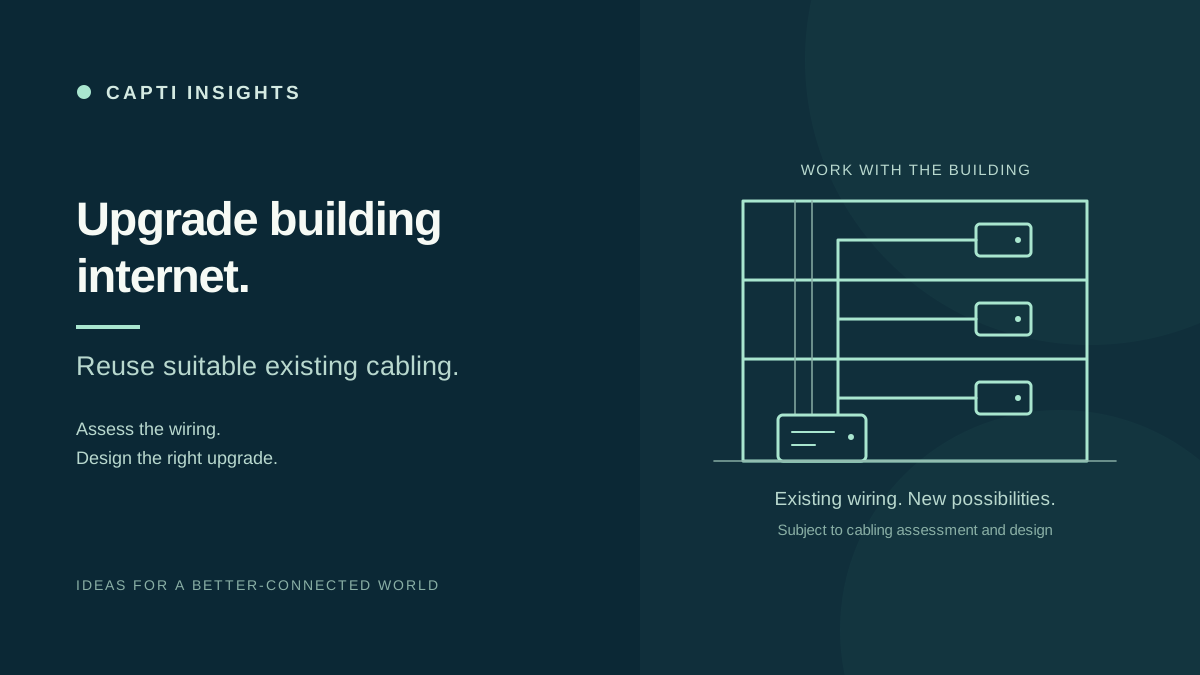
Before choosing a network design, assess the existing fibre, copper cabling, risers, communications rooms and routes into individual apartments. Access arrangements and installation timing matter just as much as the equipment.
A property with usable cable pathways may need a different approach from one where new pathways must be created. The right proposal should explain the scope, the work required in common property and what residents can expect during installation.
Separate network capacity from the service you buy
Fibre-to-the-premises, or FTTP, carries fibre directly to an apartment or business. It can remove the constraints of a final copper connection, while creating capacity for services to develop over time.
Some Capti projects use a 10Gbps-capable network platform. That is different from the speed of an individual retail plan or the performance of a device over Wi-Fi. Ask which services are available at the property, what equipment they require and how upload and download speeds are described.
Give shared spaces their own plan
A resident’s home broadband connection and Wi-Fi in a lobby, pool area or car park have different requirements. Shared-area coverage depends on the layout, access-point placement, cabling, expected number of users and how the service will be managed.
Building systems such as CCTV, intercoms and management platforms also need clear connectivity and support arrangements. Include them in the assessment, with their requirements considered separately from residents’ broadband.
Decide what needs a second connection
Where a property needs an alternative to its primary connection, discuss the available access paths and how failover would work. Fibre and fixed wireless may offer physical diversity where both are suitable.
The proposal should explain what the backup connection supports, how it is monitored and any limits during failover. The design should reflect which services the property needs to keep connected during an outage.
Make the project and commercial terms clear
Before proceeding, ask for a written scope covering:
- The installation: cable routes, common-property works, access to apartments and the proposed schedule.
- The resident experience: available services, equipment, activation steps and support contacts.
- Ownership and operation: who owns, maintains and supports each part of the network.
- The commercial terms: any installation costs, incentives or revenue arrangements, including the conditions that apply.
These details are specific to the building and proposal. They should be confirmed in writing rather than assumed from a general offer.
See the approach in practice
Explore Capti’s projects at Circle on Cavill, Southport Central and West Village for examples of different building requirements.
For your property, start a conversation with Capti’s property team. An assessment of the building and its users is the first step towards a suitable plan.