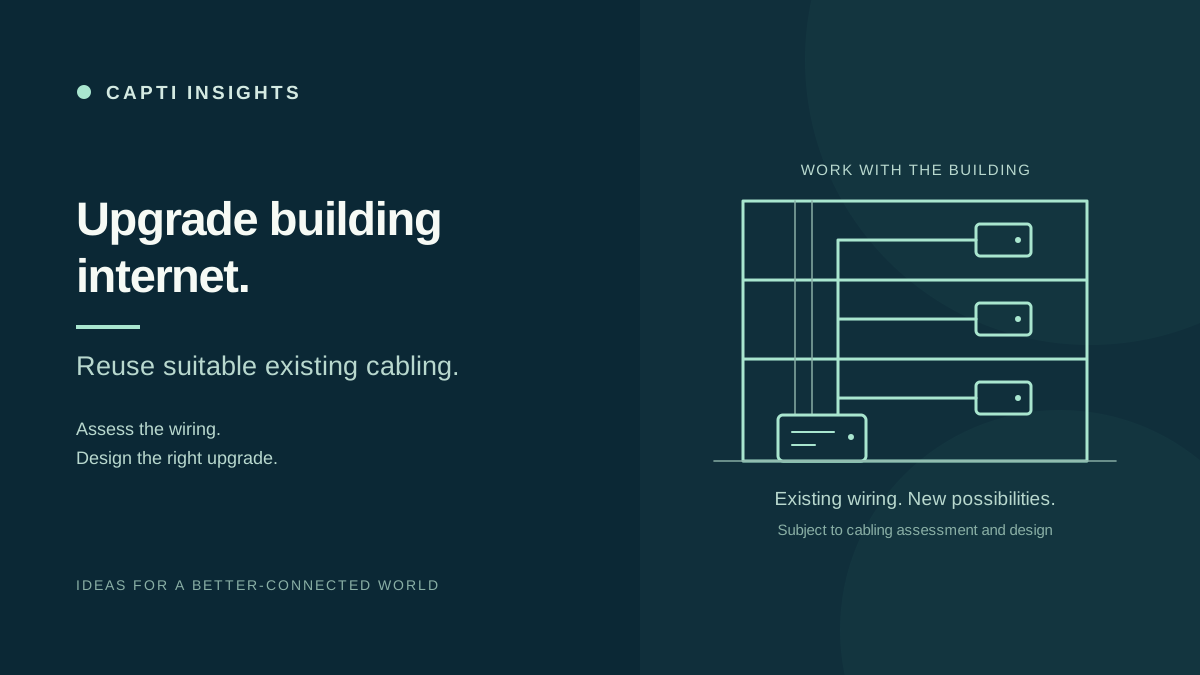
Better connectivity does not always require replacing every cable. In an established hotel, retirement village or apartment building, some of the infrastructure needed for an upgrade may already be in place.
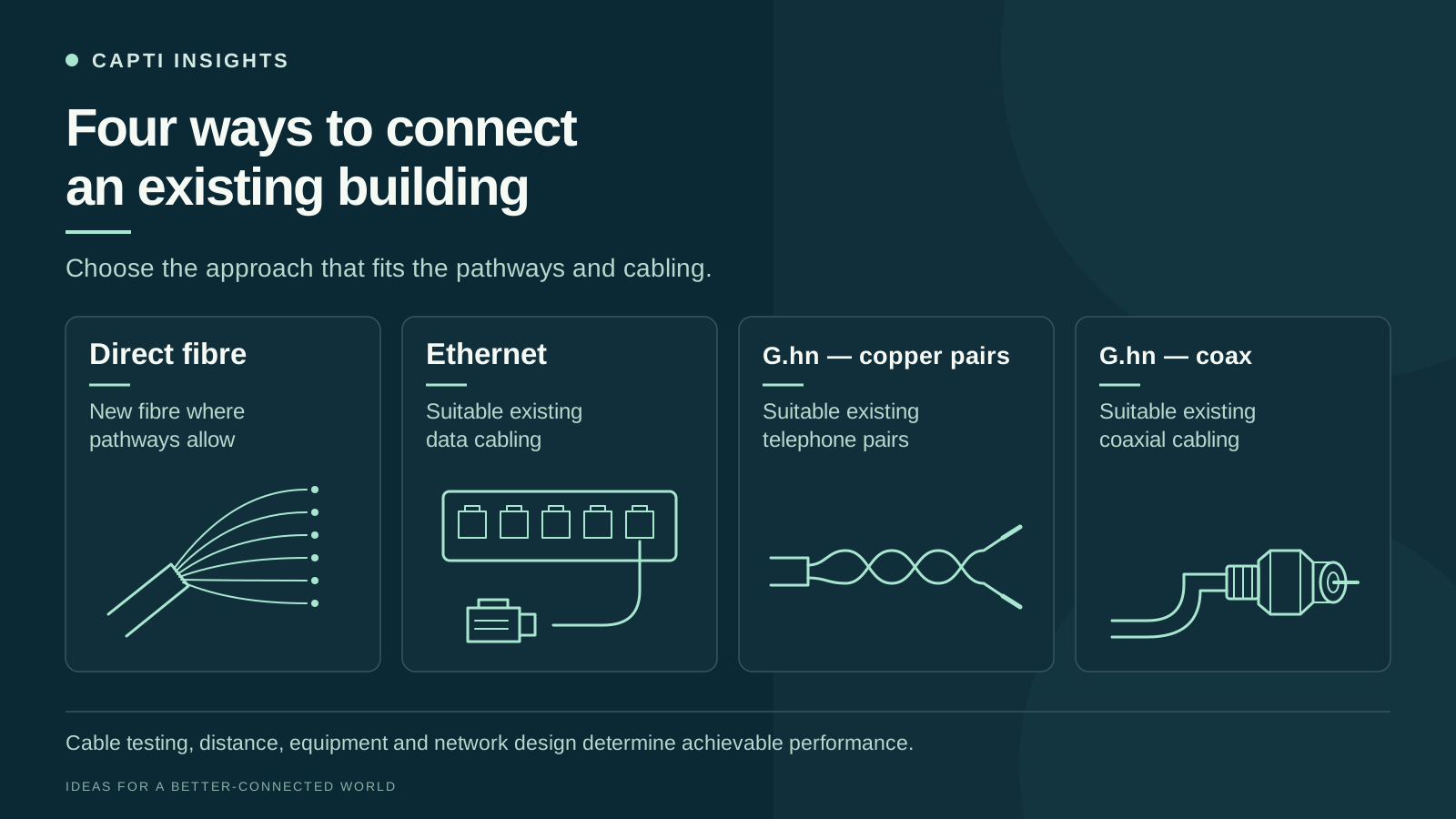
The opportunity is to identify what can be reused, where new fibre would make a meaningful difference, and how the network should support the property over time. Capti can assess direct fibre, existing Ethernet cabling and technologies that carry data over suitable telephone pairs or coaxial cable.
Start with the building, not the equipment
Two buildings with the same number of rooms can require very different designs. One may have accessible risers and spare conduits. Another may have limited pathways, occupied rooms and existing cabling that remains useful.
A practical assessment considers cable type, condition, length and layout; access to communications rooms; existing services using the cables; power; required capacity; and installation disruption. That establishes whether to install new infrastructure, reuse existing wiring or combine both.
Direct fibre where pathways allow
Where suitable pathways are available, running fibre directly to apartments, rooms or individual premises provides a strong foundation for future upgrades. Available speeds depend on the optical equipment, network architecture and selected service.
Cable routes, terminations, equipment locations and power requirements still need coordination. A fibre connection into a room also needs suitable equipment to serve local wired devices or Wi-Fi.
For new developments and substantial refurbishments, plan these requirements early. Our fibre-readiness checklist explains the key considerations.
Reuse suitable Ethernet cabling
Some properties already have structured data cabling connecting rooms or wireless access points to communications cabinets. Suitable, correctly installed Cat5e or Cat6 cabling can support Gigabit Ethernet over a compliant channel of up to 100 metres, including patch leads. Cisco technical guidance documents the relevant interface and cabling limits.
Cable labels alone do not prove an installation is ready. Damaged pairs, poor terminations, unsuitable joins or excessive length can limit performance. Where testing confirms suitability, upgrading switches and endpoint equipment may retain much of the physical installation.
G.hn over telephone pairs or coaxial cabling
G.hn provides another option where suitable legacy wiring exists but new cable routes are difficult. Compatible equipment can carry data over telephone pairs or coaxial cable. G.hn access systems can support gigabit-class connectivity, although performance depends on equipment, medium, distance and layout. HomeGrid Forum describes these access applications.
A telephone socket or television outlet does not automatically establish suitability. The survey must identify cable routes, branches, splitters, shared sections and existing services. Equipment must match the cable medium and the proposed topology.
G.fast over short telephone copper runs
G.fast can carry high-speed data over suitable short telephone copper pairs, typically between building access equipment and individual premises. Distance, cable condition and interference influence achievable performance.
Gigabit-class capability is possible under suitable conditions. An nbn G.fast trial reported nearly 970 Mbps over 20 metres of copper. This historical test illustrates technical potential; it is not a current retail offer or a promise for every installed line.
G.fast and G.hn are different technologies. Assess each against the actual wiring and project requirements rather than treating them as interchangeable telephone and coax solutions.
What does up to 1Gbps mean?
Separate the capacity of the connection to a room, the bandwidth shared across the building, the internet service supplied and the performance of Wi-Fi devices.
For G.hn and G.fast, establish whether an advertised figure describes physical connection rate, combined capacity or usable throughput. Do not automatically interpret it as a guaranteed 1Gbps download service or 1Gbps simultaneously in both directions.
Ask for expected download and upload performance, the basis for those figures and a clear acceptance test. A design proposal should turn equipment specifications into an understandable service commitment.
Better cabling still needs good Wi-Fi design
Delivering a fast connection to a room does not guarantee strong Wi-Fi throughout it. Access-point placement, walls, interference, device capabilities and simultaneous users all influence the result.
See our guides to managed Wi-Fi for hotels and resorts and retirement-living Wi-Fi for coverage, onboarding and support considerations.
Combine technologies in a staged upgrade
The answer need not be identical throughout a property. A project may use fibre between buildings, Ethernet within refurbished areas and assessed legacy wiring elsewhere. Coordinate installation with access windows, room availability and planned refurbishment.
Document retained infrastructure, expected performance and future upgrade options. Where the goal is a new commercial backbone, our commercial building fibre guide explains tenant and building-service planning.
Find out what your building can support
Before committing to a complete rewire, establish what is already available and where replacement would deliver lasting value.
Talk to Capti about upgrading your building’s connectivity. We can assess pathways, existing wiring and service requirements, with achievable speeds confirmed through equipment selection, testing and network design.