Symmetrical primary service
Over-water network path
Observed commissioning latency
For Tangalooma Island Resort, the connection to the mainland carries much of the business behind the destination. Bookings, administration, conferencing, CCTV, remote applications and guest Wi-Fi all depend on it.
Supporting those demands from Moreton Island brings a particular engineering challenge: almost 46 kilometres of Moreton Bay separate the resort from Capti’s primary mainland transmission site at Bowen Hills.
Capti’s brief was to deliver more capacity across that distance, with low latency and a stronger resilience design. The result was a dedicated 200/200 Mbps symmetrical service, doubling the capacity of the resort’s previous 100 Mbps primary connection.

More capacity for an island operation
The existing microwave service had reached its practical limits. Previous attempts to lift capacity from 100 Mbps to 150 Mbps had introduced errors, packet loss and dropouts.
For a continuously operating resort, additional bandwidth needed to come with dependable performance. A connection that struggled under load would affect the systems staff used to manage the property as well as the services available to guests.
A fibre build across Moreton Bay had been considered. Its multi-million-dollar construction cost and complexity made it impractical for the project, placing the focus on what a carefully engineered wireless connection could deliver.
Engineering the path across Moreton Bay
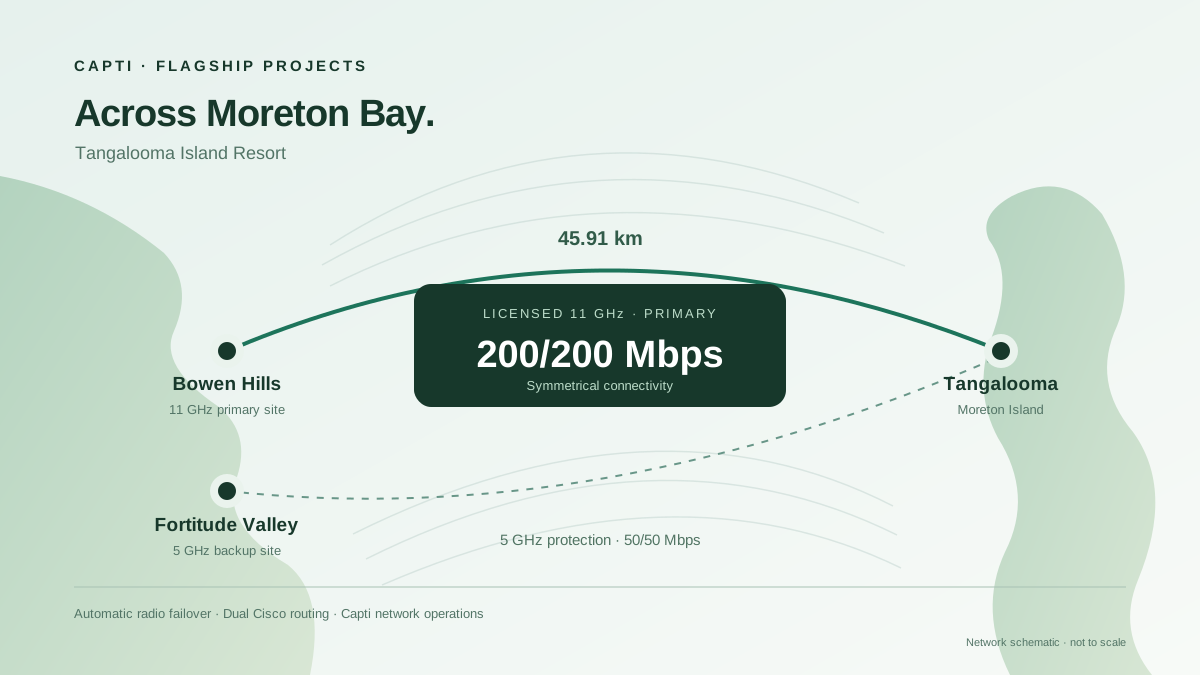
Capti and its technology partners assessed several potential mainland transmission sites before selecting Bowen Hills for the primary link. The final point-to-point path from Bowen Hills to Tangalooma spans 45.91 kilometres.
Over that distance, establishing line of sight is one part of the design. Reflections from the water, atmospheric conditions, rainfall, Earth curvature and clearance around the radio path all need to be considered.
Detailed transmission modelling informed the site selection, antenna heights and equipment configuration. The primary service uses licensed 11 GHz microwave, delivering 200 Mbps in both directions between Tangalooma and Bowen Hills.
That symmetrical capacity supports the resort’s need to send data as well as receive it, including video calls, remote business applications and the systems connecting the island operation to the mainland.
Resilience from the resort into the core network
The service includes a separate 5 GHz secondary radio connection from Tangalooma to Fortitude Valley, provisioned at 50/50 Mbps, with automatic failover if the primary radio connection becomes unavailable. By connecting to a different mainland site from the 11 GHz primary link at Bowen Hills, it provides site diversity as well as a lower-capacity fallback to support continuity while the primary connection is restored.
At the resort, dual Cisco customer-edge routers form part of the resilience design and integrate with Tangalooma’s existing continuity infrastructure.
On the mainland, the service connects into Capti’s Cisco MPLS core network, with diverse core connectivity through Bowen Hills and Fortitude Valley, and diverse data-centre connectivity through NEXTDC B1 and B2.
Capti’s Brisbane network operations centre monitors the service proactively. Starlink provides out-of-band remote management: a separate means of accessing equipment to investigate faults, supporting the ongoing operation of a site where physical attendance requires additional planning. This management connection is distinct from the primary and secondary microwave services.
Together, these elements address resilience at the radio, routing and core-network layers.
On site: installation and management access
| Tower installation | Out-of-band management |
|---|---|
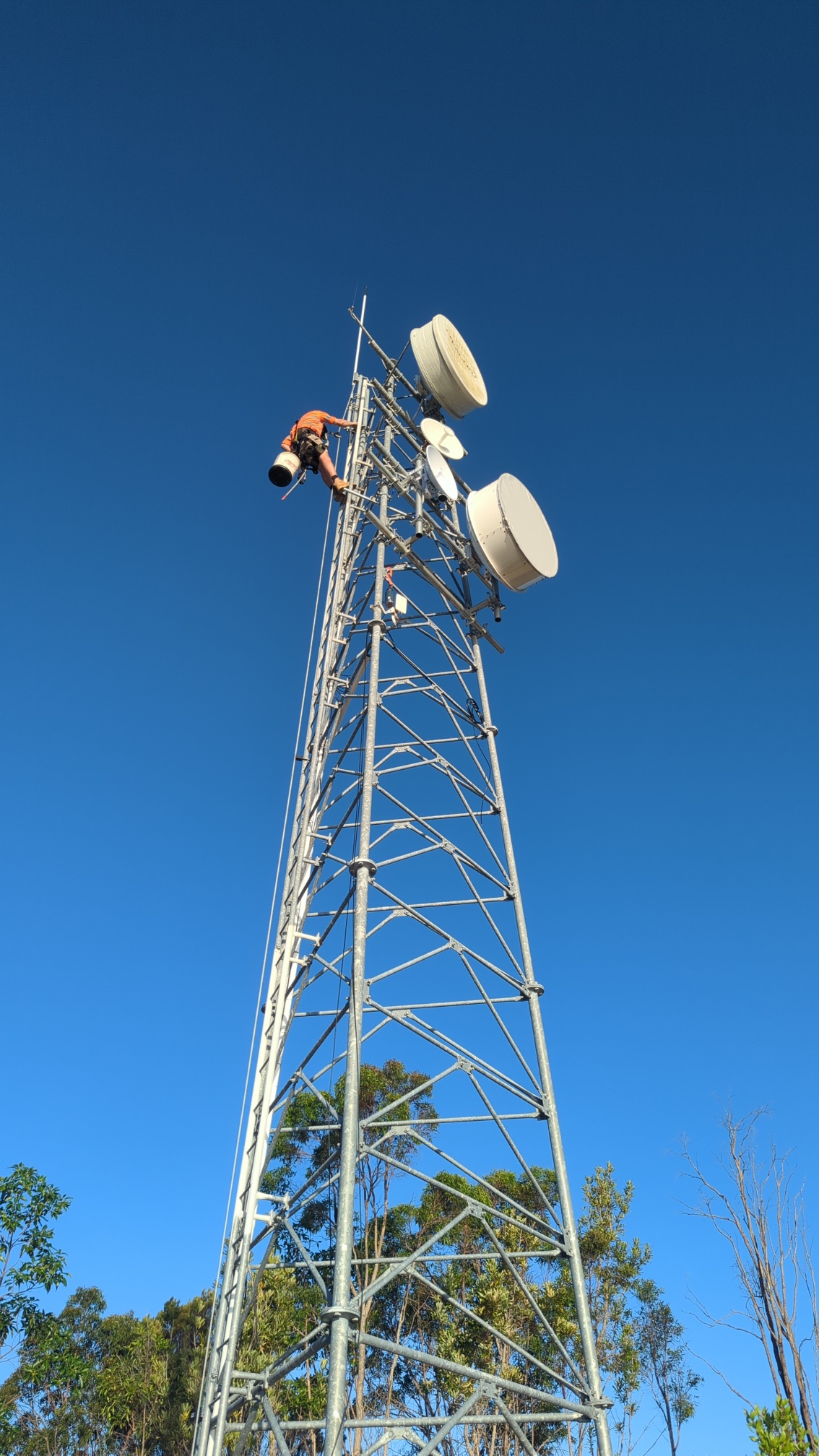 | 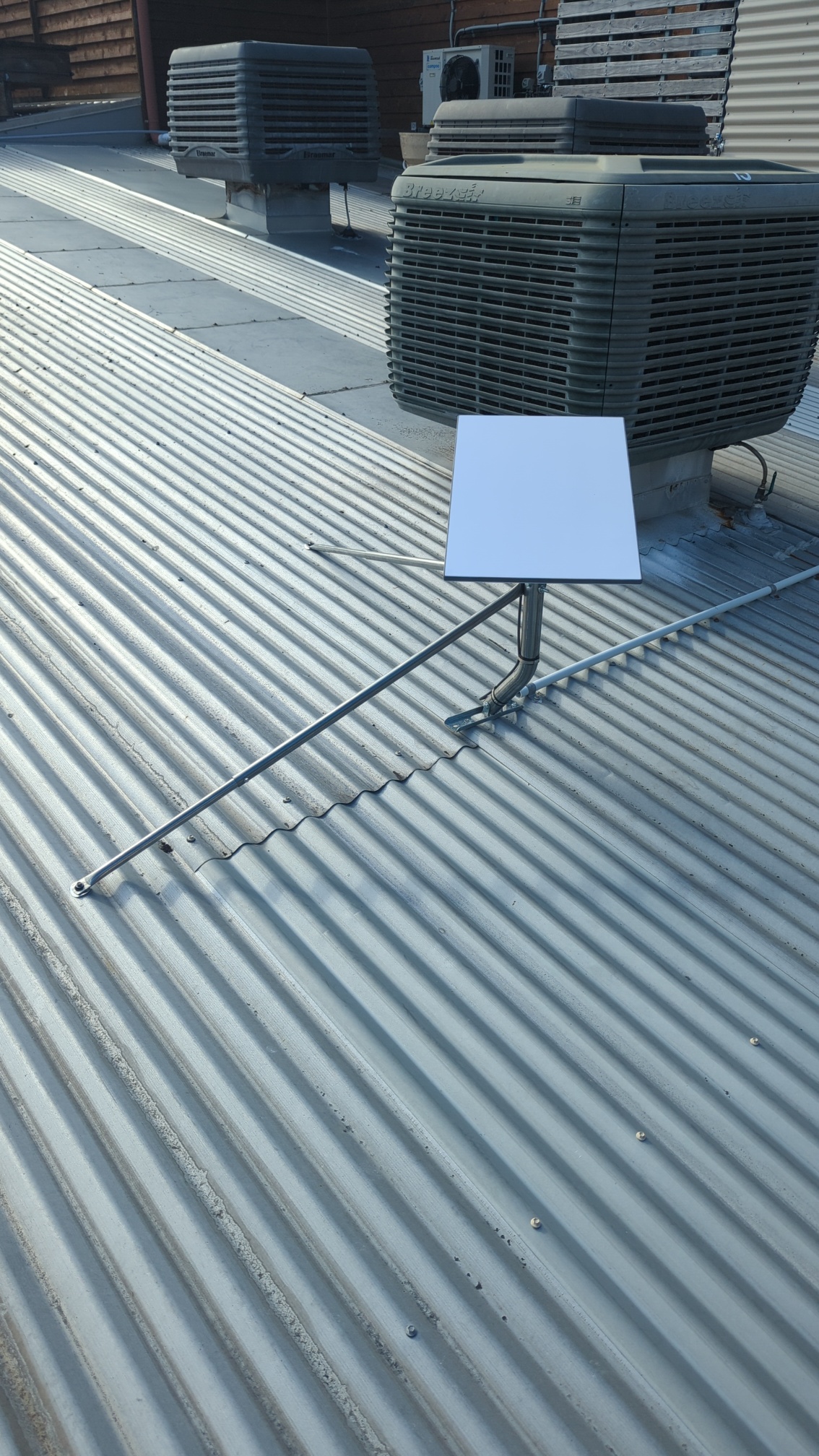 |
| On-site tower work during the Tangalooma connectivity project. | Starlink provides a separate path for remote equipment management. It is distinct from the 11 GHz primary service and 5 GHz backup link. |
Tested before the transition
The new infrastructure was installed, tuned and tested while Tangalooma’s existing service remained operational. This gave the engineering teams time to validate the connection before moving production traffic onto it.
During commissioning, Capti repeatedly tested the service at its full 200/200 Mbps capacity. Automated tests ran at 20-minute intervals, with observed latency of approximately 2–4 milliseconds.
No performance degradation was observed during the commissioning test period, which included testing across different weather conditions. These figures describe the commissioning results for this connection.
The service was handed over in March 2026. In an engineering follow-up almost three months later, the connection was reported to be operating very well, with no known issues.
A stronger connection for Tangalooma
The project delivered twice the previous primary bandwidth, symmetrical capacity and automatic radio protection, backed by Capti’s routing, core network and operational support.
It also demonstrated the value of designing around the location. Site selection, transmission modelling, radio configuration and network resilience all contributed to a connection built for the demands of a major island resort.
For Tangalooma, that means more capacity across Moreton Bay and a network designed to support the operation on the other side.
Connectivity for demanding locations
Capti designs and operates fibre and high-capacity wireless networks for resorts, commercial properties and businesses whose requirements extend beyond standard connectivity options.
If your site needs more bandwidth, stronger resilience or a connection across difficult terrain, talk to Capti about an engineered connectivity solution.
For more detail, read about designing diverse fibre and wireless connections. Explore fixed wireless connectivity for your location.