A fast internet plan needs a capable network inside the home. This review looks at Capti’s experience with the NETGEAR Orbi AX11000 mesh system and the practical factors to consider before investing in new Wi-Fi equipment.
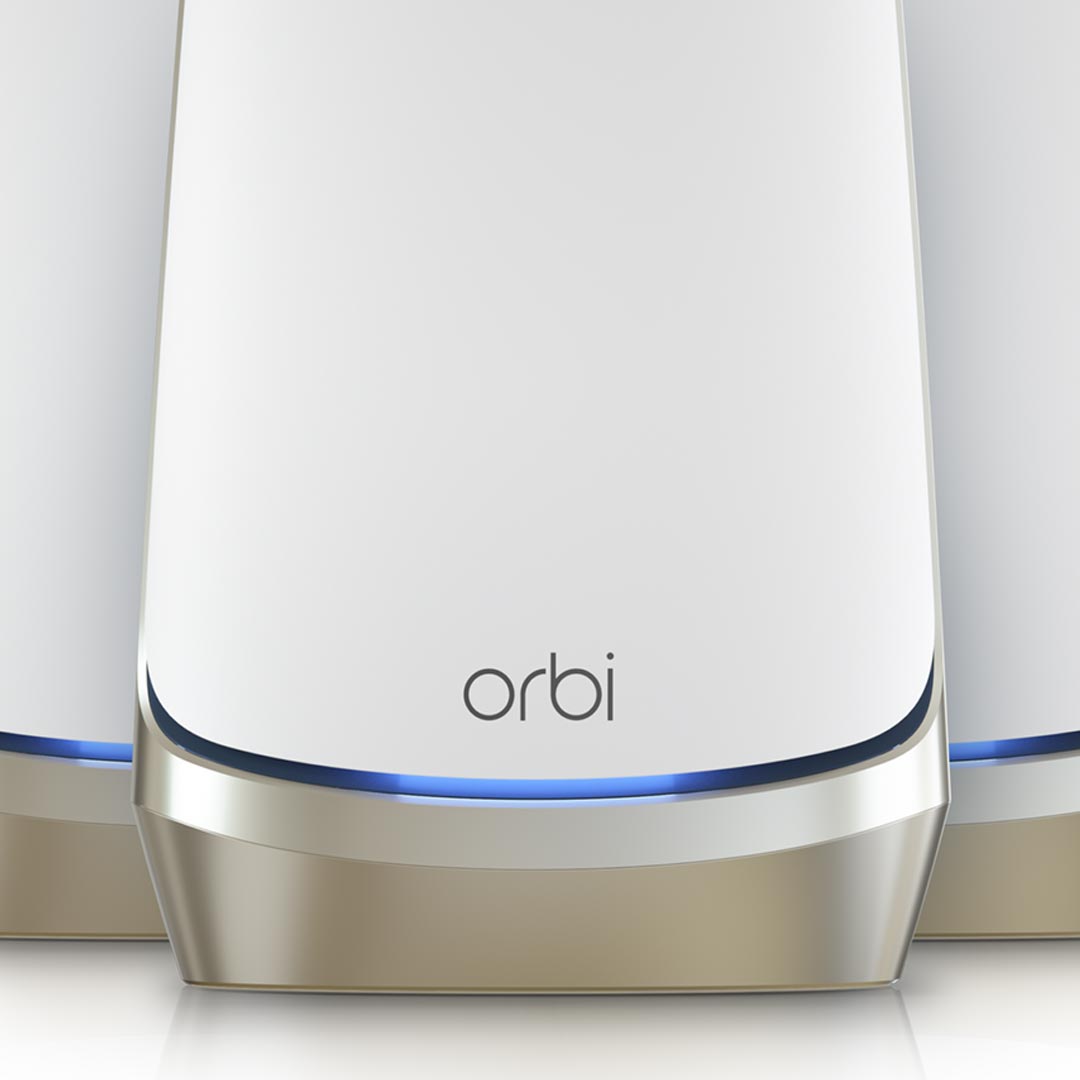
Introducing the NETGEAR Orbi AX11000
The Orbi AX11000 Wi-Fi mesh system designed to cater to the needs of the most bandwidth-intensive homes. It stands out with its Quad-Band technology, including a dedicated 6GHz band brought forth by Wi-Fi 6E — the latest evolution in Wi-Fi technology. This new band is designed to offer less congestion and interference, providing a cleaner channel for newer devices and potentially faster speeds.
Wi-Fi 6E is a significant leap forward, allowing devices to operate on a previously unused spectrum. This can lead to improved speeds, lower latency, and more reliable connections, especially in crowded areas. The Orbi AX11000 claims up to 10.8Gbps of data transfer speeds and covers up to 400 square meters, promising to eliminate dead zones in large homes.
Our Testing and Review
In our hands-on evaluation of the NETGEAR Orbi AX11000, set against the backdrop of a 150-square-meter apartment equipped with Capti's high-speed fibre optic service, we approached the task with considerable anticipation. Our comprehensive assessment spanned various scenarios to scrutinise the system’s throughput, range, and stability. Although the Orbi system showcased commendable performance metrics in several respects, it encountered challenges in specific contexts, notably in environments obstructed by physical barriers such as concrete walls.
The system's touted next-generation features and Wi-Fi 6E integration, while impressive on paper, met with practical constraints, limiting our ability to consistently realise the promised gigabit speeds across all testing conditions. The introduction of the dedicated 6GHz band did enhance connectivity for Wi-Fi 6E compatible devices; however, the net performance uplift across our network environment did not revolutionise the user experience as we had hoped.
Key Observations from Our Evaluation
Maximising High-Speed Internet: The Orbi AX11000 impressively taps into the potential of multi-gigabit fiber connections, achieving speeds of up to 2Gbps for downloads and 1.7Gbps for uploads through its in app speed test tool. This showcases its strength in environments where leveraging high-speed internet is critical.
Solo Orbi Unit Performance: Testing the primary Orbi unit independently with a IPhone 14, speeds ranged from 400 to 600Mbps in areas with clear line of sight within 10 - 15 metres. However, performance significantly dropped in areas obstructed by concrete or located far from the unit, pointing out its limitations without additional nodes to extend its reach.
Real-World Speeds vs. Advertised Claims: Despite claims of gigabit speeds for home backhaul, real-life testing in a 150-square-meter space showed a peak of 800Mbps for downloads and 300Mbps for uploads, falling short of expectations. This was observed even with nodes placed only 15 meters apart with clear line of site, indicating that actual performance can vary based on environmental factors.
Impact of Physical Obstructions: Positioning a satellite node in a kitchen separated by a concrete wall, merely 16 meters away from the master node, drastically reduced speeds to around 150Mbps. This underscores the system’s vulnerability to physical barriers.
Ethernet Connection Advantages: Connecting nodes directly via Ethernet cables on its 1Gb ports enabled reaching the anticipated 1Gbps speeds, suggesting that despite wireless advancements, wired connections remain superior for consistency and reliability.
Comparison to a More Affordable Option: When compared to a $200 AX3000 router, the Orbi system maintained stronger signals in most tested locations. However, the question of value emerges, as users must weigh the cost against the performance gains.
- Beamforming Technology Benefits: The initial boost in speed post-connection can be attributed to Wi-Fi 6’s beamforming technology, which enhances signal directionality for improved performance.
Final Thoughts: Is It Worth the Investment?
Our review of the NETGEAR Orbi AX11000 Mesh Kit concludes that while it's a powerful Wi-Fi system with Wi-Fi 6E technology, its high cost may not offer the best value for all users. It suits households with demanding speed needs and a taste for the latest tech. However, more budget-friendly alternatives, like Ubiquiti access points, provide comparable performance for most users.
Technology advances rapidly, and the decision to invest in a premium product like the Orbi AX11000 requires careful consideration. We plan to reevaluate the system after software updates to see if improvements justify the investment. Our ongoing analysis aims to help consumers make informed choices, especially when more cost-effective solutions are available.
For more detail, read about improving Wi-Fi coverage inside your property. Explore home internet availability for your location.