Brisbane’s preparations for the 2032 Olympic and Paralympic Games create a useful planning horizon for businesses, property owners, event organisers and construction teams. Connectivity decisions made during design and delivery can shape how a place operates for years.
For a venue, that might mean permanent fibre with room to grow. For a construction project, it may mean internet in the site office before the permanent services arrive. For an event organiser, it means ticket scanners, production teams and guests staying connected during a short, busy window.
These needs call for different designs. A useful plan connects them without treating every location as the same job.
Begin with what the network must support
Start with the people, applications and spaces. List the systems that need to work, where they will be used and what an interruption would mean. A guest checking email and a production team sending a live video feed have very different requirements.
Record the expected busy periods, upload requirements, site boundaries, power availability and delivery dates. Include the period before opening: contractors, testing teams and venue operators may need connectivity long before visitors arrive.
Temporary events: design around the live operation
Event internet needs to reach the gate, the production area, the vendors and the public spaces. The incoming connection is only one part of that system. Cabling, switches, Wi-Fi access points and the people operating them determine how useful the connection becomes.
Separate essential operational traffic from public access. Confirm the requirements of ticketing, payment and streaming suppliers, and agree who owns each interface. Where an interruption would be costly, specify backup connectivity and test the actual applications during failover.
Our event internet and Wi-Fi guide sets out the planning questions for festivals, expos and temporary venues.
Construction sites: connect the project before the building
A site office needs dependable access to drawings, cloud platforms, meetings and document control. Workers may also need Wi-Fi across selected work areas, while cameras and access systems have their own bandwidth and security requirements.
Fixed wireless can be assessed where waiting for a permanent cable service does not suit the programme. Its feasibility depends on the location, radio path, mounting arrangements and available network capacity. The design should also account for cranes, new structures and relocating site compounds.
Read our construction-site internet and Wi-Fi guide for a practical approach to each stage of the build.
Public Wi-Fi: plan for people moving through a place
Public Wi-Fi is a service across a physical space. A precinct, hospitality venue or shared area needs a design based on where people gather, how long they stay and how many devices may be active together.
Coverage, capacity and a straightforward connection experience all matter. Guest access should be separated from business systems, and the operator needs a clear support and maintenance arrangement after installation.
Our public Wi-Fi planning guide covers those decisions in more detail.
Permanent venues: consider the fibre early
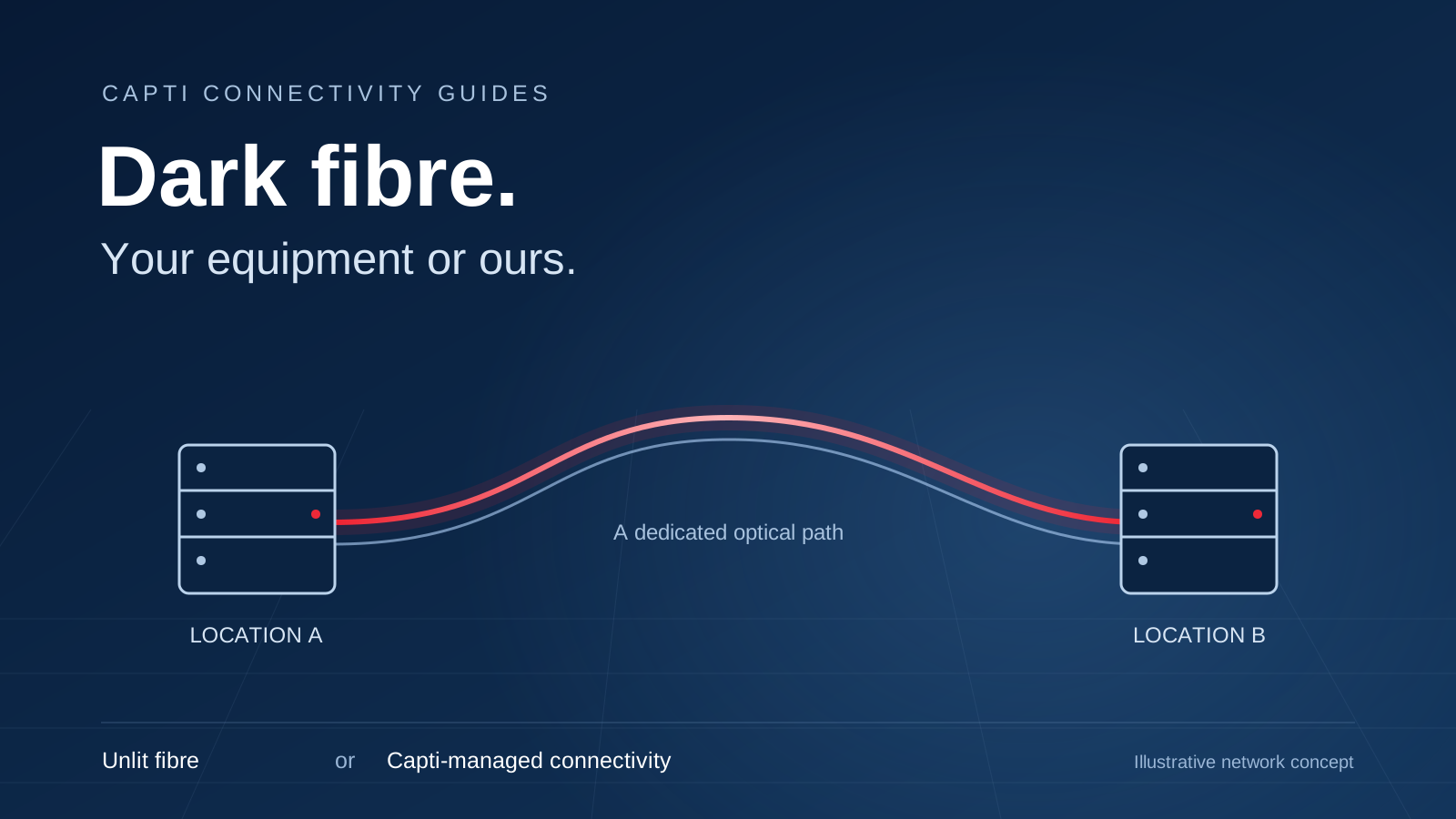
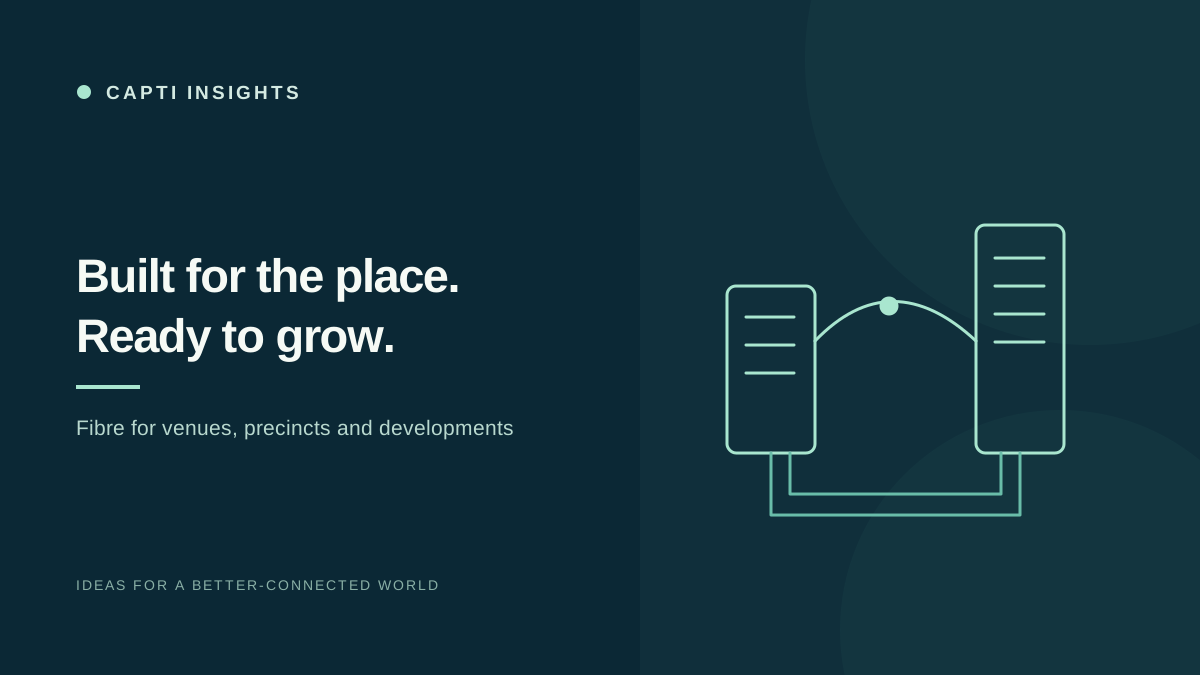
Long-lived facilities benefit from early discussions about building entry, communications rooms, pathways and future expansion. A bespoke fibre design can assess connections between buildings, a private link to another site, or a managed service with defined capacity and support.
Discuss physical route diversity where continuity matters. Two services are not necessarily independent simply because they have different names or providers.
Explore bespoke fibre for venues and precincts and our guide to fibre and fixed-wireless diversity.
Build a useful legacy into the brief
Ask what should remain when a temporary event closes or a construction project reaches handover. Some equipment may be removed; other cabling, pathways and fibre assets may have a lasting purpose. Agree ownership, documentation and operational responsibility before installation.
A phased approach can connect a site during construction, expand for an event and transition to permanent operation. Each phase needs its own scope, acceptance checks and commercial terms.
Start a site-specific conversation
Send Capti the site address, plans, expected users, key applications and target dates. We can assess connectivity options and develop a proposal around the location and operating requirements. Availability, capacity and delivery timing are subject to assessment.
Discuss your project with Capti.
This is Capti’s independent planning guide for local businesses and property owners. It does not indicate an official Brisbane 2032 appointment or affiliation. For Games information, see the Australian Olympic Committee’s Brisbane 2032 page; businesses seeking public procurement information can use Business Queensland’s tendering resources.