A large venue or mixed-use precinct rarely has just one connectivity requirement. Offices, tenants, public areas and building systems may share a location while needing different services and responsibilities.
Bespoke fibre planning starts with that operating picture. It considers where connections are needed, how the site will develop and which parts of the network should be managed together.
The result may involve new fibre construction, existing network infrastructure or a combination. What matters is a clear design with defined endpoints, service boundaries and delivery dependencies.
Start with the connections you need
Identify the buildings, communications rooms and external locations that need to be linked. Distinguish internet access from private connectivity between sites: a fibre path between two buildings does not automatically include an internet service.
List the systems using those connections, their expected capacity and the consequences of an outage. A tenant internet service, public Wi-Fi network and private building-management connection may require different arrangements.
Give future stages a place in the brief. A pathway that is easy to provide during construction may be difficult to add after landscaping or fit-out.
Assess the route, not just the street address
A fibre network nearby does not establish that a suitable service is ready to order. The assessment must consider available infrastructure, building entry, pathways, termination points and any civil works or third-party dependencies.
For a precinct, internal routes between buildings can be as important as the external connection. Coordinate them with the development programme and the parties responsible for site infrastructure.
Capti can assess options using its own network and selected wholesale partners. Availability, delivery timing and commercial terms depend on the specific locations and proposed route.
Choose how the service will be operated
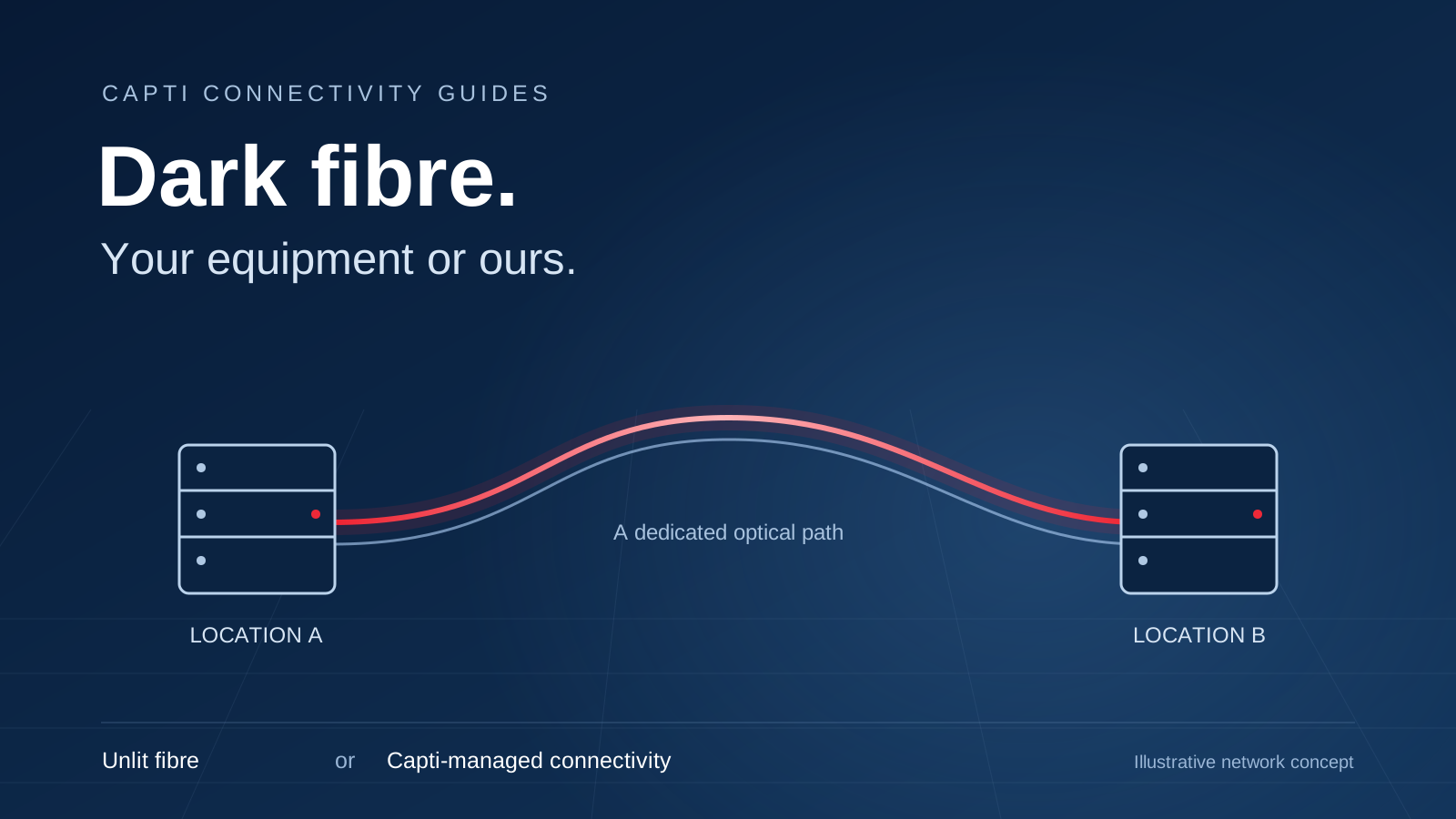
A managed fibre service provides an operational connection with agreed capacity, interfaces and support responsibilities. For an organisation with its own network engineering capability, unlit dark fibre may offer a different operating model.
With unlit fibre, the customer’s equipment lights the path. With a Capti-managed connection built on that fibre, Capti supplies and operates the agreed transmission equipment. Routers, firewalls, internet access and local-network management need to be included explicitly where required.
Read our dark fibre guide for a fuller explanation of those choices.
Make resilience a physical design question
Two connections can share a duct, building entrance, equipment room or power supply. If continuity is important, ask which dependencies are shared and what happens when one of them fails.
A second fibre route or a fixed-wireless path may help address particular risks, subject to feasibility. Neither should be described as diverse until the relevant paths and dependencies have been assessed.
The service design should specify backup capacity, failover behaviour and the tests used to accept the arrangement. Our fibre and fixed-wireless diversity guide provides a starting checklist.
Plan construction, commissioning and handover
Agree the work boundaries: external construction, building pathways, internal cabling, equipment installation and configuration. Identify access requirements, power, rack space and responsibilities for reinstatement.
The delivery programme should allow for surveys, design, necessary approvals, construction and testing. An indicative date becomes useful when the dependencies behind it are understood.
At handover, request route and equipment documentation, test records, service identifiers and support contacts. Define ownership and maintenance responsibilities so the operator can manage the network throughout its life.
Connect each phase of the project
A development may need temporary internet before the permanent fibre is ready. An operating venue may need an additional service during construction, then a controlled migration to the final design.
Coordinate that transition with users and system suppliers. Keep the existing service available until the replacement has been tested and accepted where the project plan requires continuity.
See our construction-site connectivity guide for the temporary phase and our public Wi-Fi guide for shared spaces.
Bring the project to Capti
Send the site addresses, drawings, required connections, target capacity and project stages. Tell us which services your team wants to operate and which you would like Capti to manage.
Discuss a bespoke fibre assessment. We can investigate the route and prepare a proposal around the project’s actual requirements. For related planning across the region, read Preparing Brisbane for 2032.